
.svg)
How to Decompress Your Spine
How to Decompress Your Spine
If you’re dealing with back pain, pinched nerves, disc injuries, spinal stenosis, or sciatica, you may have heard about “spinal decompression” as a way to relieve pressure and promote healing. But with so many options—stretching exercises, hanging from a bar, inversion tables, or professional spinal decompression tables—how do you know what’s truly effective?
At Boulder Sports Clinic, we help patients every day who’ve tried at-home methods with limited relief and are ready for a more specific, targeted solution. Let’s break down the options.
At-Home Spine Decompression Options
1. Exercises and Stretches
Simple stretches like child’s pose, cat-cow, or knee-to-chest can help lengthen the spine and temporarily relieve tension. These movements improve flexibility and circulation, but they don’t always address the deeper causes of disc or nerve compression.
Best for: General mobility, light stiffness, and prevention.
2. Hanging from a Bar
Hanging allows gravity to gently stretch your spine. Some people find this relieves nerve pressure or loosens tight muscles. However, it’s hard to control how much decompression is happening or target the exact location of the problem. It can be hard to get decompresison while also engaging the muscles required to hang.
Best for: Quick relief of mild pressure; athletes with healthy shoulders and grip strength.
3. Inversion Tables
By flipping upside down, inversion tables create spinal traction. While this can reduce pressure and feel good temporarily, inversion tables put stress on other joints, such as the knees and ankles, and aren’t recommended for people with high blood pressure, glaucoma, or certain heart conditions.
Best for: Occasional home use for those without health restrictions.
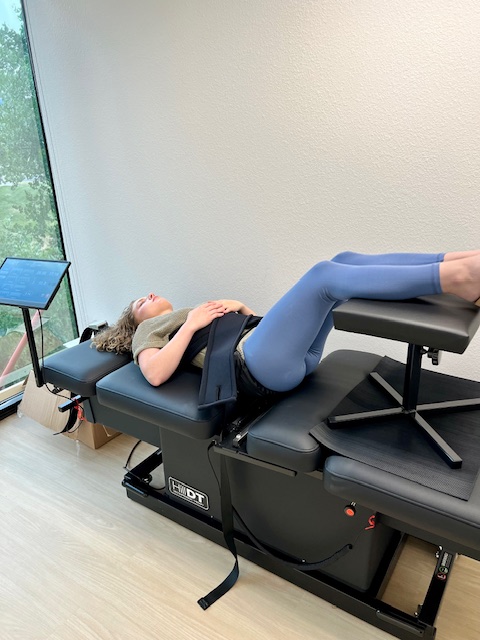
Professional Spinal Decompression: The Gold Standard
Unlike the general, uncontrolled methods above, our spinal decompression table is precise and medically designed to target the exact spinal level causing your pain. Here’s why it’s more effective:
- Targeted treatment – We can isolate specific discs and areas of compression.
- Controlled traction – Gentle cycles of pulling and relaxing prevent muscle guarding.
- Safe for most patients – No inversion or joint strain.
- Promotes healing – Increases blood flow and nutrient delivery to damaged discs.
Patients with herniated discs, degenerative disc disease, spinal stenosis, sciatica, or chronic low back and neck pain often experience significant, lasting relief after a series of decompression treatments.
Why Location Matters in Decompression
Pain doesn’t always come from the entire spine—it often comes from a specific injured disc or pinched nerve. That’s why precise targeting is so important. While stretching or inversion tables may feel good, they don’t have the ability to zero in on the problem area the way a professional decompression table can. This means that you often can't fix a problem with those other methods.
Pairing Decompression with Other Therapies
At Boulder Sports Clinic, we combine decompression with:
- Chiropractic adjustments to improve mobility.
- Massage therapy to reduce muscle tension.
- Physical therapy & rehab exercises to strengthen support structures.
- Laser and shockwave therapy for accelerated healing.
This integrated approach ensures you’re not only relieving pain but also fixing the root cause and preventing flare-ups.
Take the Pressure Off Your Spine
If you’ve been searching for lasting relief from back or neck pain, it’s time to go beyond temporary fixes. At Boulder Sports Clinic, our spinal decompression therapy is safe, effective, and tailored to your condition.
📞 Call today to schedule your consultation and learn if decompression is right for you.
Related Posts

Pregnancy Chiropractor in Boulder: The Benefits of Safe Prenatal Chiropractic Care

Car-Crash Injuries in the Longmont & Boulder Area: Why You Need Chiropractic + Physical Therapy + Massage Therapy
If You Can’t Stand Up Straight, You Most Likely Have a Disc Problem | Lumbar Disc Injury Treatment Boulder
Experience the difference at Boulder Sports Clinic.
Contact us today to schedule an appointment and start your journey towards optimal health and peak performance. Still have questions? Call us now at (303) 444-5105
