

Graston Techniquein Boulder, CO
Instrument-Assisted Soft Tissue Mobilization (IASTM) to Break Down Scar Tissue, Release Fascia & Restore Range of Motion
Repetitive athletic strain, past surgeries, and acute muscle tears can cause tough, fibrotic scar tissue to form within your soft tissues. At Boulder Sports Clinic, our certified providers utilize specialized stainless-steel Graston Technique instruments to precisely detect and break up deep fascial restrictions, reduce chronic inflammation, and accelerate tissue recovery.

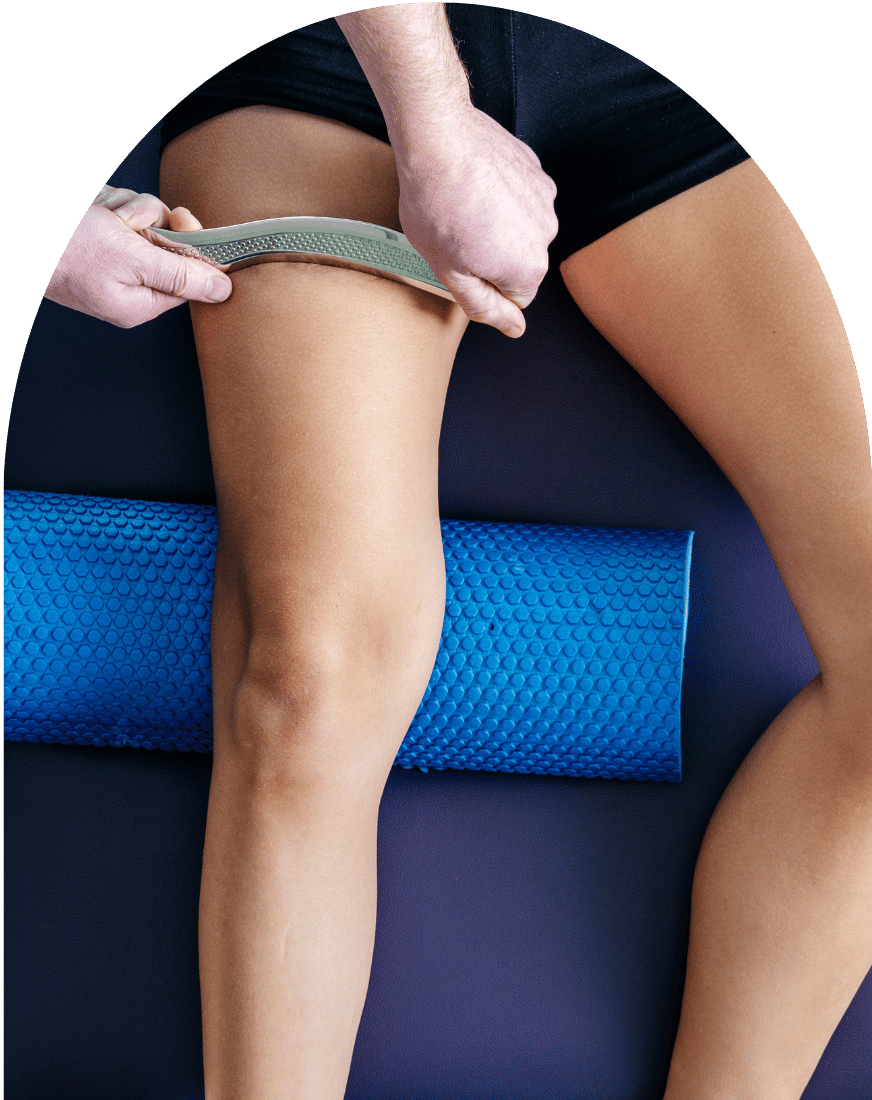
What is the Graston Technique (IASTM)?
Using specially contoured, medical-grade stainless-steel instruments, our certified clinicians glide along your muscles and tendons to scan for and detect areas of restricted tissue texture. When an adhesion is identified, the instrument delivers controlled microtrauma to the fibrotic area. This targeted mechanical stimulation:
- Breaks down rigid, disorganized scar tissue and fascial cross-links.
- Triggers a localized inflammatory healing cascade that recruits fresh fibroblasts.
- Stimulates collagen resynthesis in an organized, functional alignment.
- Restores optimal blood flow, cellular nutrition, and pain-free joint mobility.
Conditions That Respond Best to Graston Technique Therapy

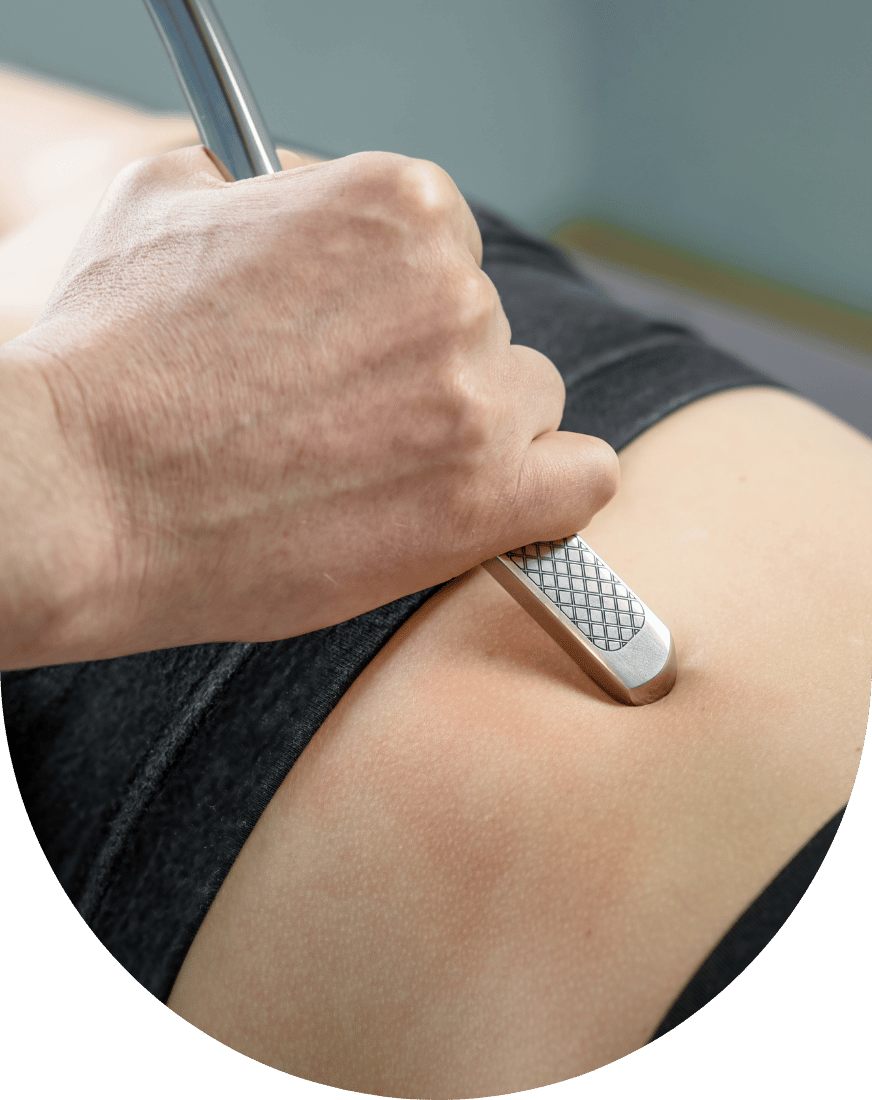
Certified IASTM Therapy Integrated with Sports Medicine
At Boulder Sports Clinic, Graston Technique is never treated as a standalone quick fix. Breaking down scar tissue is step one; teaching your body how to load and move without compensation is what keeps you pain-free.Our clinicians integrate instrument-assisted soft tissue work into an active, multidisciplinary rehabilitation protocol:
Warm-Up & Detection: Preparing tissue with heat or active movement before precisely isolating adhesions with Graston instruments.
IASTM Mobilization: Applying specific directional strokes along restricted fascial lines to break apart micro-adhesions.
Active Stretching & Joint Mobilization: Immediately lengthening the treated tissues while they are receptive and pliable.
High-Load Functional Strengthening: Engaging the muscle through its newly restored range of motion to lay down strong, parallel collagen fibers that resist future tears.
Quick Answer: What Is Shockwave Therapy and Does It Work?
What Is Shockwave Therapy?
This can help:
- Increase circulation to damaged tissue
- Stimulate collagen production
- Break down chronic scar tissue and calcifications
- Reduce pain signaling
What Conditions Does Shockwave Therapy Treat?
Shockwave therapy is most effective for chronic, tendon-based conditions, including:
- Shoulder tendon pain (rotator cuff, calcific tendonitis)
- Knee tendon pain (patellar or quadriceps tendinopathy)
- Plantar fasciitis and chronic heel pain
- Facet joint irritation
- Achilles tendinopathy
- Tennis elbow / golfer’s elbow
- Hip and glute tendon pain
Conditions Spinal Decompression Therapy Can Help
Shoulder tendon pain (rotator cuff, calcific tendonitis)
Knee tendon pain (patellar or quadriceps tendinopathy)
Plantar fasciitis and chronic heel pain
Achilles tendinopathy
Tennis elbow / golfer’s elbow
Hip and glute tendon pain
How Shockwave Therapy Works to Relieve Pain
Treatment helps by:
- Improving tissue quality
- Increasing load tolerance
- Reducing pain sensitivity
- Supporting long-term recovery
What Makes Our Shockwave Therapy Different?
At Boulder Sports Clinic, we:
- Confirm you’re a good candidate before starting
- Create a treatment plan coordinating with other services if appropriate
- Combine shockwave therapy with active rehabilitation
- Treat runners, climbers, skiers, lifters, and active adults
- Focus on long-term outcomes, not short-term pain suppression
What to Expect During Shockwave Therapy
- Sessions typically last 5–10 minutes per area
- Treatment is non-invasive and performed in-office
- Discomfort during treatment is common but temporary
- Normal daily activity usually resumes immediately
- A personalized treatment plan
How Long Does It Take to See Results?
Who We Help
- Have pain lasting longer than 3 months
- Were told they have tendinitis or tendon degeneration
- Didn’t improve with rest, injections, or basic therapy
- Want to avoid surgery or injections if possible
- Are active and want durable recovery
Frequently Asked Questions About Shockwave Therapy
How many shockwave sessions will I need?
Is shockwave therapy safe?
Does shockwave therapy actually work?
Is shockwave therapy better than injections?
Is shockwave therapy painful?
Break Down Stubborn ScarTissue and Move Without Pain
Whether you are dealing with chronic tendinitis, restricted post-surgical scar tissue, or repetitive strain from athletic training, our certified Graston Technique specialists in Boulder are ready to help.

Frequently Asked Questions About Graston Technique
How is the Graston Technique different from Gua Sha, massage, or Active Release Technique (ART)?

Its contoured, medical-grade stainless-steel edges act like a stethoscope for your tissues, amplifying tactile feedback so your clinician can pinpoint and break down exact fibrotic adhesions.
Compared to Active Release Technique (ART), which uses hands-on tension during active joint motion to free trapped muscles and nerves, Graston excels at remodeling superficial tendon thickening, ligament sprains, and dense fascial cross-links.
Does Graston Technique cause bruising, and who should avoid it?
Can the Graston Technique help with old surgical scars?
Can I exercise, run, or lift after a Graston Technique session?
Is the Graston Technique painful?
Most patients describe it as a productive, deep-pressure feeling rather than sharp pain, and your clinician continuously adjusts stroke speed and pressure to stay within your comfort level.
How long does a Graston session take, and how many treatments are needed?
Is the Graston Technique covered by insurance or HSA/FSA?